
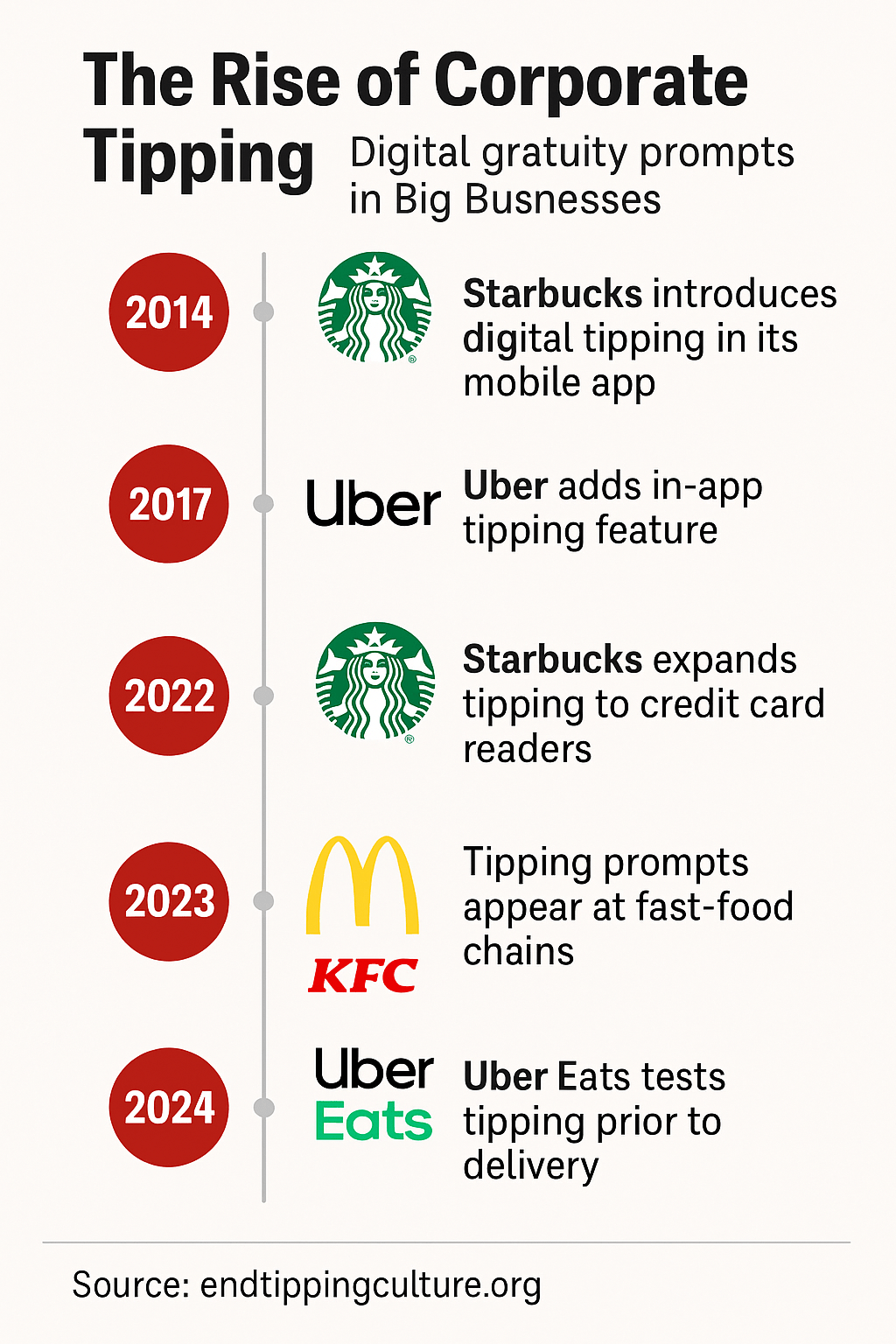
A Timeline of Digital Gratuity Prompts in Big Business

Over the past decade, tipping in the U.S. has expanded beyond traditional service industries, infiltrating corporate giants like ride-sharing platforms, coffee chains, and fast-food restaurants. This shift has been propelled by digital payment technologies and changing consumer behaviors, leading to what many term “tipflation.” Here’s a chronological overview of how major companies have integrated tipping into their business models:
2014: Starbucks Introduces Digital Tipping
In March 2014, Starbucks launched a feature in its iPhone app allowing customers to tip baristas digitally after making a purchase. This move marked one of the first major integrations of tipping into a corporate mobile payment system.
2017: Uber Adds In-App Tipping
Responding to driver feedback and competitive pressure from Lyft, Uber introduced an in-app tipping feature in June 2017. This allowed passengers to tip drivers directly through the app up to 30 days after a trip, aligning Uber with industry standards and addressing longstanding driver concerns.
2022: Starbucks Expands Tipping Options
In late 2022, Starbucks expanded its tipping system to include prompts on credit card readers at checkout. Customers paying with cards were presented with options to tip $1, $2, or a custom amount. This change aimed to increase tip frequency but received mixed reactions from customers, with some finding the prompts awkward or pressured.
2023: Fast-Food Chains Implement Tipping Prompts
By 2023, tipping prompts began appearing in fast-food establishments, particularly at self-service kiosks and digital payment terminals. Chains like McDonald’s and KFC introduced options for customers to add gratuity during the ordering process, a departure from traditional fast-food practices. This shift was facilitated by point-of-sale systems like Square and Toast, which made it easier to integrate tipping into the payment flow.
2024: Uber Tests Advance Tipping Feature
In November 2024, Uber began testing an “advance tip” feature, allowing riders to tip drivers before the ride commenced. This initiative aimed to incentivize drivers and potentially improve service quality. However, it faced criticism for potentially creating a pay-to-play dynamic and was labeled as “unethical” by consumer protection authorities in India.
Conclusion
The integration of tipping into corporate platforms reflects a broader trend of shifting wage responsibilities from employers to consumers. As digital payment systems evolve, the line between fair compensation and consumer obligation continues to blur, prompting ongoing debates about the role of tipping in modern commerce.
 EndTippingCulture.org
Leave a comment