
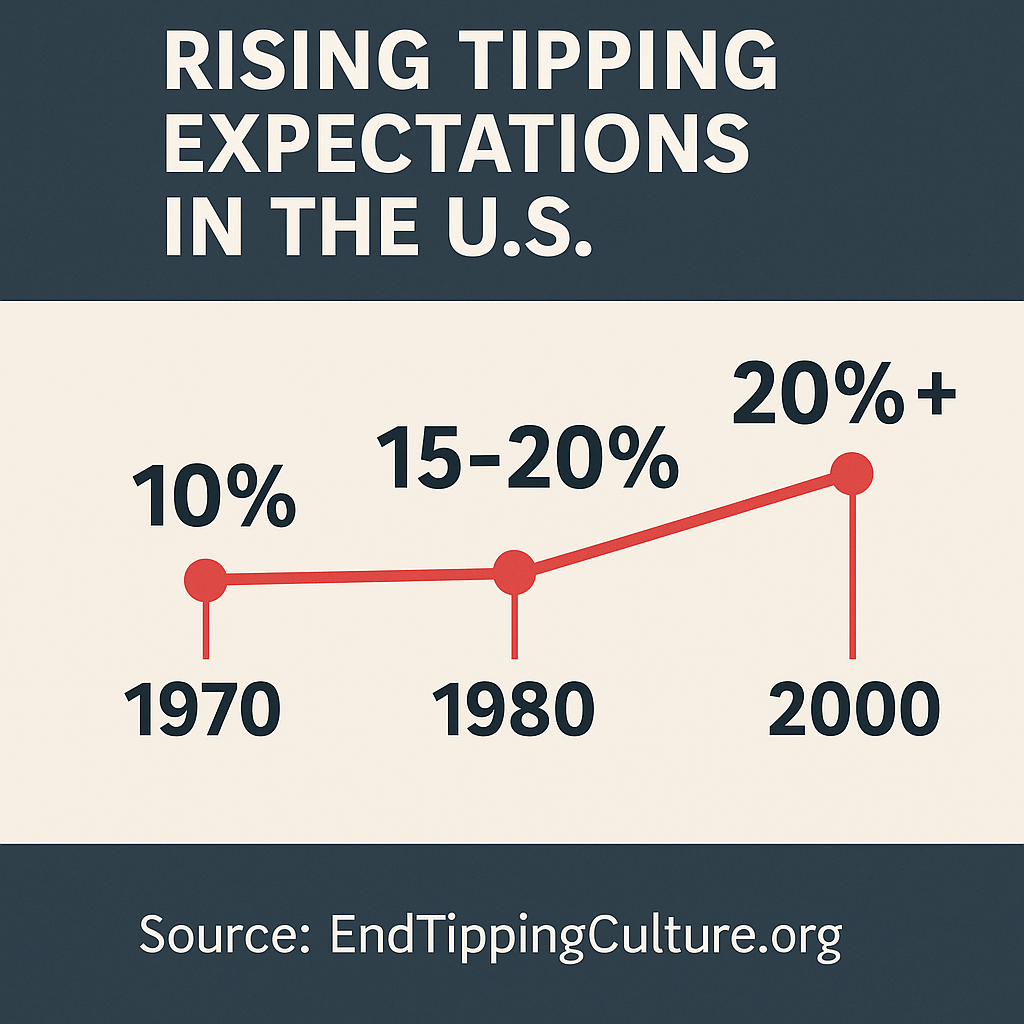
Over the past half-century, tipping in the United States has transformed from a modest gesture of appreciation to a widespread expectation, permeating various service industries. This evolution reflects broader societal shifts, economic policies, and technological advancements.
📜 Timeline: Key Milestones in U.S. Tipping Culture

1970s: Standardization of Tipping Percentages
Tipping norms solidify, with 10% becoming the standard gratuity in restaurants.
1980s: Increase in Tipping Expectations
The standard tip rises to 15%, reflecting inflation and changing service industry dynamics.
1990s: Expansion Beyond Dining
Tipping becomes customary in additional sectors, including salons, taxis, and hotel services.
2000s: Digital Payment Systems Introduce New Norms
The advent of digital payment platforms introduces preset tipping options, influencing customer behavior.
2010s: Rise of ‘Tipflation’
Tipping expectations escalate, with 20% becoming the new norm in many establishments.
2020s: Tipping Culture Under Scrutiny
Public discourse intensifies around tipping practices, with debates on fairness and the role of employers in ensuring fair wages.
📊 Current Trends and Public Sentiment
Recent surveys indicate a growing discomfort with tipping culture:
A Pew Research Center study found that 72% of Americans feel they’re being asked to tip in more places than five years ago. Bankrate reports that two-thirds of U.S. adults have a negative view of tipping, with 30% believing it’s “out of control.”
These sentiments reflect a broader concern about the sustainability and fairness of the current tipping system.
🔮 Looking Ahead
The future of tipping in the U.S. remains uncertain. While some advocate for the elimination of tipping in favor of fair wages, others believe in preserving the tradition with reforms to address its shortcomings. As the conversation continues, it’s clear that tipping culture is at a crossroads, prompting both consumers and industry stakeholders to reconsider its role in modern society.
 EndTippingCulture.org
Leave a comment